
Will the Fed Cut Rates in September 2026? Key Outlook
Will the Fed Cut Rates in September 2026? Key Outlook
The Federal Reserve’s next interest rate decision is one of the biggest events investors are watching in 2026.
After months of mixed economic data, markets are trying to determine whether the Fed will begin lowering interest rates in September.
While no outcome is guaranteed, several important factors will influence policymakers before their next meeting.
Let’s take a closer look at what investors should expect.
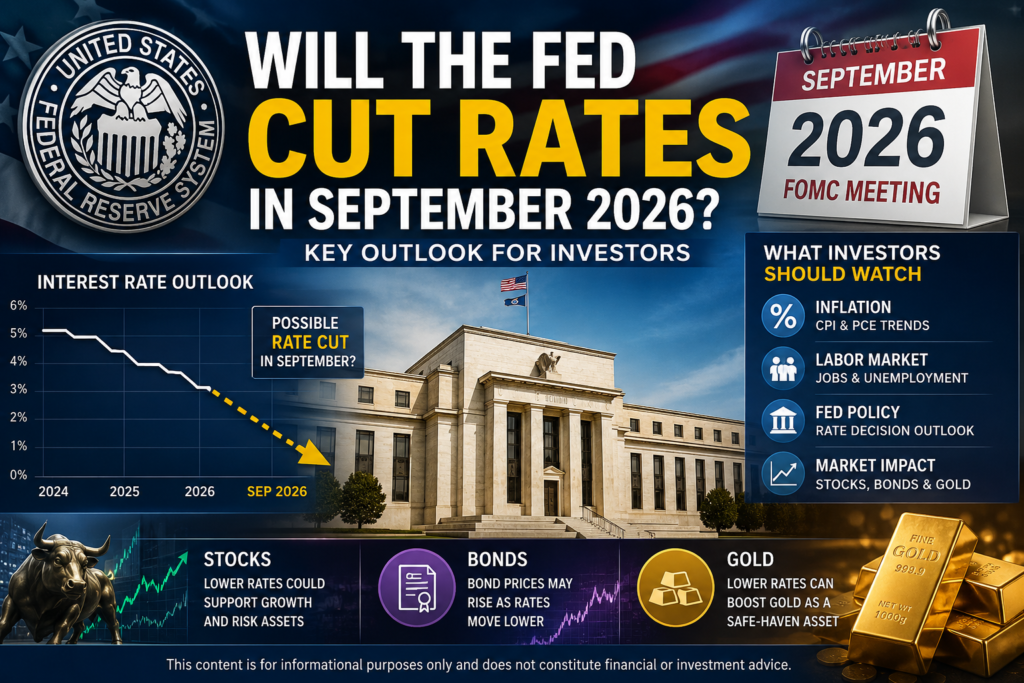
Why Markets Expect a Rate Cut
Lower interest rates generally support economic growth by reducing borrowing costs for consumers and businesses.
Many investors believe the Fed could begin easing monetary policy if inflation continues to cool and the labor market gradually softens.
Expectations for lower rates often improve investor sentiment and increase demand for risk assets.
Inflation Remains the Biggest Factor
Inflation is still the Fed’s primary concern.
Although price pressures have eased compared with previous years, policymakers continue to monitor:
- Consumer Price Index (CPI)
- Personal Consumption Expenditures (PCE)
- Wage growth
- Housing inflation
If inflation continues moving closer to the Fed’s long-term target, the probability of a rate cut may increase.
Labor Market Conditions
Employment data also plays a critical role.
Strong job creation usually gives the Federal Reserve more flexibility to keep interest rates higher for longer.
However, slower hiring or rising unemployment could strengthen the case for monetary easing.
How Stocks Could React
Stock markets often respond positively to expectations of lower interest rates.
Growth sectors such as:
- Technology
- Artificial Intelligence
- Semiconductors
typically benefit when borrowing costs decline.
However, markets also consider why the Fed is cutting rates.
If cuts occur because of a rapidly weakening economy, investor optimism may remain limited.
What It Means for Gold
Gold often performs well when investors expect lower interest rates.
Lower bond yields reduce the opportunity cost of holding gold, making it more attractive as a safe-haven asset.
Investors should also monitor:
- U.S. Dollar strength
- Treasury yields
- Geopolitical developments
What Bond Investors Should Watch
Bond prices generally move higher when interest rates decline.
Long-term Treasury bonds may benefit if markets become increasingly confident that the Fed will begin easing policy.
Bond ETFs could also experience stronger demand under this scenario.
Risks That Could Delay a Rate Cut
Several factors could postpone a September rate cut:
- Inflation remains stubbornly high.
- Employment stays exceptionally strong.
- Consumer spending accelerates.
- Energy prices rise significantly.
Any combination of these developments may encourage the Federal Reserve to keep rates unchanged for longer.
Final Thoughts
The September 2026 Federal Reserve meeting could become one of the most important events for global financial markets.
Investors should continue monitoring inflation reports, employment data, and Fed communications rather than relying on a single forecast.
A diversified investment strategy remains the best approach during periods of uncertainty.
This article is for informational purposes only and should not be considered financial or investment advice.
Key Takeaways
- Inflation remains the Fed’s top priority.
- Employment data will influence the decision.
- Lower rates could support stocks and bonds.
- Gold may benefit if rates decline.
- Investors should follow CPI, PCE, and labor market reports.