
Why Oil Prices Are Rising Again in 2026: What It Means for Inflation, Stocks, and the Global Economy
Why Oil Prices Are Rising Again in 2026: What It Means for Inflation, Stocks, and the Global Economy
Oil prices have returned to the spotlight after climbing sharply in recent trading sessions. Rising geopolitical tensions, tighter supply expectations, and resilient global demand have combined to push crude prices higher, once again making energy one of the most closely watched markets.
While higher oil prices often benefit energy producers, they also create ripple effects throughout the global economy—from inflation and interest rates to corporate earnings and consumer spending.
Here’s why oil prices are rising again and why investors should pay attention.
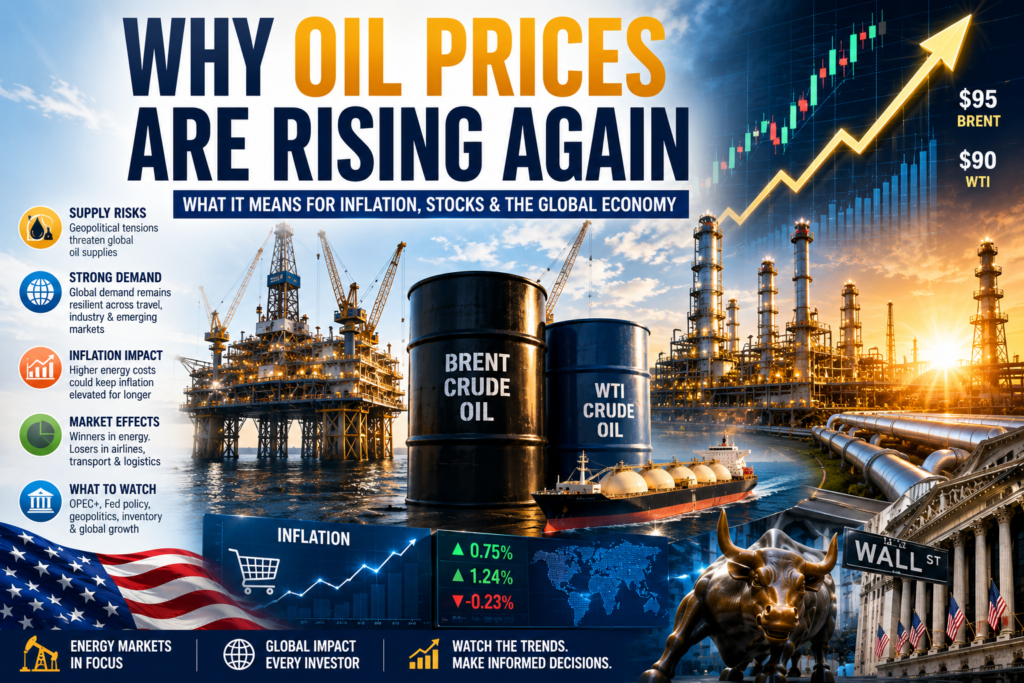
1. Geopolitical Tensions Are Increasing Supply Risks
One of the biggest catalysts behind the latest rally is growing concern over global oil supplies.
Any disruption involving major oil-producing regions can quickly reduce expected supply, leading traders to bid prices higher. Even the possibility of production interruptions often creates significant volatility in energy markets.
Markets typically react well before any actual supply shortage occurs because crude oil is one of the world’s most strategically important commodities.
2. Global Demand Remains More Resilient Than Expected
Despite concerns about slower economic growth, demand for fuel remains relatively strong.
Air travel continues to recover, industrial activity has stabilized in many regions, and emerging markets continue to consume increasing amounts of energy.
If global demand remains healthy while supplies become tighter, oil prices naturally move higher.
3. Inflation Could Become More Persistent
Energy prices directly influence inflation.
Higher crude oil prices increase transportation costs, manufacturing expenses, and logistics costs. Those higher costs often reach consumers through more expensive goods and services.
For central banks such as the U.S. Federal Reserve, persistent inflation could delay future interest-rate cuts.
That is one reason investors monitor oil prices closely even if they do not invest directly in energy.
4. Stock Market Winners and Losers
Not every sector reacts the same way to rising oil prices.
Potential Winners
- Oil & Gas Producers
- Energy Infrastructure Companies
- Pipeline Operators
- Oil Service Providers
Potential Challenges
- Airlines
- Transportation Companies
- Logistics Businesses
- Consumer Retailers with high shipping costs
Technology stocks may experience mixed reactions depending on whether higher inflation changes expectations for future interest rates.
5. What Investors Should Watch Next
Several developments could determine whether oil continues climbing.
- OPEC+ production decisions
- Geopolitical developments
- U.S. inflation reports
- Federal Reserve policy meetings
- Global economic growth indicators
- Weekly U.S. crude inventory data
Any change in these factors could quickly influence energy markets.
Final Thoughts
Oil prices rarely move in isolation.
They influence inflation, interest rates, corporate profits, and investor sentiment across nearly every asset class.
Although rising oil prices can create opportunities in the energy sector, they also introduce new risks for consumers and businesses.
For long-term investors, monitoring the energy market remains an important part of understanding the broader economic picture.
Key Takeaways
- Rising geopolitical tensions are increasing oil supply concerns.
- Strong global demand continues to support higher crude prices.
- Higher oil prices may keep inflation elevated.
- Energy companies often benefit, while transportation industries may face pressure.
- Investors should watch OPEC+, inflation data, and central bank decisions.
FAQ
Why are oil prices increasing?
Oil prices are rising due to geopolitical risks, supply concerns, resilient demand, and expectations that global inventories could tighten.
Does higher oil mean higher inflation?
Often yes. Energy costs affect transportation, manufacturing, and many consumer goods, making inflation more persistent.
Which stocks benefit from higher oil prices?
Energy producers, oil service companies, pipeline operators, and some infrastructure firms generally benefit when oil prices rise.
Can rising oil prices affect interest rates?
Indirectly, yes. Higher energy prices can increase inflation, making central banks more cautious about cutting interest rates.