
Peptide vs Retinol: Which Anti-Aging
Peptide vs Retinol: Which Anti-Aging Ingredient Is Better for Your Skin?
If you’ve ever searched for the best anti-aging skincare ingredient, you’ve probably seen the same two names appear repeatedly: peptides and retinol.
Many skincare guides compare them as if you have to choose one or the other. In reality, they work in completely different ways, and the better choice depends on your skin type, your skincare goals, and how experienced you are with active ingredients.
Here’s what you should know before adding either one to your routine.
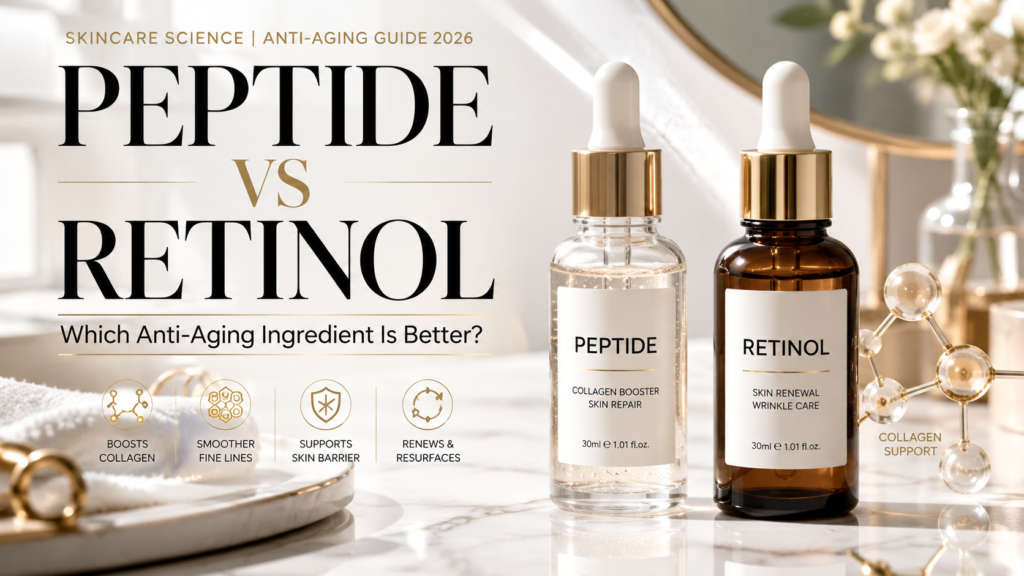
What Are Peptides?
Peptides are short chains of amino acids that help support your skin’s natural proteins, including collagen and elastin.
Instead of aggressively speeding up skin renewal, peptides help maintain the skin barrier and encourage healthier-looking skin over time.
They’re generally well tolerated, making them an excellent choice for beginners or people with sensitive skin.
What Is Retinol?
Retinol is a vitamin A derivative that increases skin cell turnover.
Because it encourages new skin cells to replace older ones, retinol can improve the appearance of fine lines, uneven skin tone, acne scars, and texture.
However, it’s also known for causing temporary dryness, redness, or peeling, especially when first introduced.
Key Differences
| Feature | Peptides | Retinol |
|---|---|---|
| Best For | Prevention | Visible wrinkles |
| Skin Type | Sensitive skin | Normal to oily skin |
| Irritation | Very low | Moderate to high |
| Beginner Friendly | ⭐⭐⭐⭐⭐ | ⭐⭐⭐ |
| Daily Use | Yes | Usually nighttime |
| Skin Barrier | Supports | Can temporarily weaken |
Which Ingredient Should You Choose?
Choose Peptides if you:
- Have sensitive skin
- Want gentle anti-aging care
- Experience frequent irritation
- Are new to skincare
Choose Retinol if you:
- Want faster wrinkle improvement
- Have acne-prone skin
- Can tolerate active ingredients
- Already use sunscreen daily
Can You Use Them Together?
Yes.
Many dermatologists recommend using peptides alongside retinol because peptides can help support the skin barrier while retinol works to improve skin texture and reduce signs of aging.
A common routine looks like this:
Morning
- Gentle Cleanser
- Peptide Serum
- Moisturizer
- Sunscreen SPF 50+
Evening
- Cleanser
- Retinol
- Moisturizer
Common Mistakes
Using too much retinol
More isn’t always better. Starting with two or three nights per week is often enough.
Skipping sunscreen
Retinol makes skin more sensitive to sunlight, making daily sunscreen essential.
Expecting overnight results
Both peptides and retinol require consistent use. Most people notice meaningful improvements after several weeks to a few months.
Final Thoughts
Peptides and retinol aren’t competitors—they’re complementary ingredients with different strengths.
If your goal is gentle, everyday support for healthier-looking skin, peptides are an excellent choice.
If you’re focused on reducing visible signs of aging and can tolerate stronger active ingredients, retinol remains one of the most researched options available.
For many people, the best routine includes both.
Key Takeaways
- Peptides help support collagen and the skin barrier.
- Retinol increases skin cell turnover and targets wrinkles.
- Sensitive skin often responds better to peptides.
- Retinol requires sunscreen and gradual introduction.
- Many skincare routines successfully combine both ingredients.
FAQ
Is peptide better than retinol?
Neither is universally better. Peptides are gentler, while retinol is generally more effective for visible signs of aging.
Can beginners use retinol?
Yes, but start with a low concentration and use it only a few nights per week.
Do peptides have side effects?
Peptides are generally well tolerated and rarely cause irritation.
Can I use peptide serum every day?
Yes. Most peptide products are designed for daily use.
Can peptides replace retinol?
Peptides support healthy skin, but they don’t replace retinol’s ability to increase cell turnover.