
Top Economic Events This Week (July 20–24, 2026)
Top Economic Events This Week (July 20–24, 2026)
The third full week of July may not feature a Federal Reserve meeting, but it still contains several important economic releases that could shape investor sentiment before policymakers meet later this month. Markets are entering a critical period as earnings season accelerates and investors evaluate whether the U.S. economy remains resilient amid elevated interest rates. Kiplinger
While the economic calendar is lighter than usual, several reports—including the Leading Economic Index, weekly jobless claims, Flash PMI surveys, and new home sales—could influence expectations for growth, inflation, and the Fed’s next move. Kiplinger
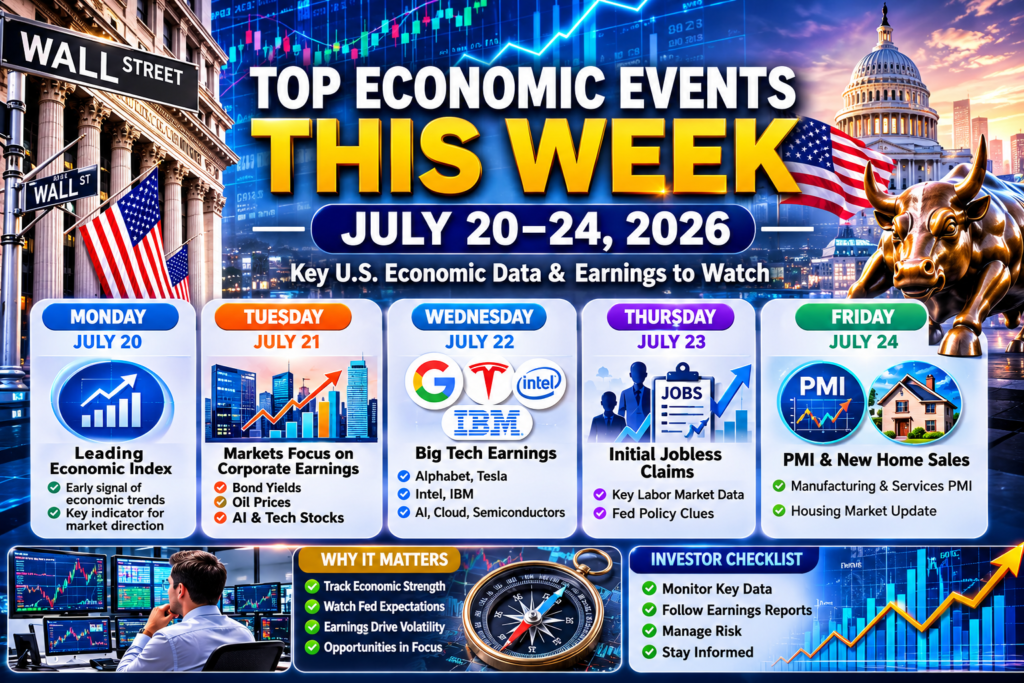
Monday (July 20)
Leading Economic Index (LEI)
The Conference Board’s Leading Economic Index provides an early signal of where the U.S. economy may be heading over the coming months.
Investors monitor this report because it combines multiple forward-looking indicators, including manufacturing activity, consumer expectations, and financial conditions.
A stronger-than-expected reading would reinforce confidence that the economy remains resilient despite higher borrowing costs.
Tuesday (July 21)
Quiet Data Calendar
No major scheduled economic releases are expected.
Instead, markets will likely shift attention toward:
- Corporate earnings
- Treasury yields
- Oil prices
- AI-related stocks
- Federal Reserve expectations
Wednesday (July 22)
Big Tech Earnings Begin
Although Wednesday features few economic reports, investors will closely watch several major corporate earnings announcements.
Technology companies continue to dominate market leadership, making their outlooks especially important for:
- Nasdaq
- AI stocks
- Semiconductor companies
- Cloud computing providers
Alphabet and Tesla are among the marquee companies expected to report this week, with investors focused on AI spending, cloud growth, and capital expenditures. Investopedia
Thursday (July 23)
Initial Jobless Claims
Weekly unemployment claims remain one of the fastest indicators of labor-market strength.
Markets generally interpret:
- Lower claims = stronger economy
- Higher claims = slowing employment
Because employment remains central to Federal Reserve policy, Thursday’s release could meaningfully influence rate expectations ahead of the next FOMC meeting. Kiplinger
Friday (July 24)
Friday is expected to be the busiest day of the week.
S&P Global Flash PMI
The Manufacturing PMI and Services PMI provide one of the earliest snapshots of business activity for July.
Investors watch PMI data because it can reveal:
- Business confidence
- New orders
- Employment trends
- Inflation pressures
Readings above 50 generally indicate expansion, while readings below 50 suggest contraction. Kiplinger
New Home Sales
Housing remains one of the most interest-rate-sensitive sectors of the U.S. economy.
Analysts will evaluate:
- Demand for new homes
- Mortgage-rate impact
- Consumer confidence
- Construction outlook
A stronger housing market may indicate consumers remain financially healthy despite elevated borrowing costs. Kiplinger
Earnings to Watch
This week also features several high-profile earnings reports that could drive broader market sentiment, including:
- Alphabet
- Tesla
- Intel
- IBM
Investors will pay close attention to AI infrastructure spending, cloud growth, semiconductor demand, and corporate guidance for the second half of the year. Investopedia
Why This Week Matters
Although the data calendar is relatively light, every report arrives just ahead of the upcoming Federal Reserve meeting.
Strong economic numbers could reinforce expectations that the U.S. economy remains resilient, while weaker data may increase speculation that policymakers will eventually shift toward a more accommodative stance later in the year. Kiplinger
Combined with major technology earnings, this week’s releases could set the tone for market direction heading into the final week of July.
Key Takeaways
- Leading Economic Index kicks off the week.
- Jobless Claims remain the key labor-market indicator.
- Flash PMI reports provide the first look at July business activity.
- New Home Sales will measure housing demand.
- Alphabet, Tesla, Intel, and IBM earnings could significantly influence market sentiment.
- Investors are positioning ahead of the next Federal Reserve meeting.