
Big Tech’s AI Spending Spree Hits an Energy Wall
Big Tech’s AI Spending Spree Hits an Energy Wall: 3 Stocks Winning the Power Crisis
If you’ve been following recent quarterly reports from major technology firms like Microsoft, Alphabet, Meta, and Amazon, one trend is clear: Capital expenditure (CapEx) dedicated to Artificial Intelligence infrastructure remains substantial.
Hyperscalers continue to allocate significant capital toward GPUs, custom chips, and data center developments. However, as this buildout scales, the industry is increasingly encountering a physical constraint: power availability.
AI-focused data centers require considerably more electricity than traditional hosting facilities. As a result, market attention is gradually expanding beyond chip designer ecosystem toward the broader energy and grid infrastructure sector.
Here is an objective look at how the AI power landscape is evolving and where industry analysts are observing structural shifts.
The Scale of AI Infrastructure Spending
The capital commitments toward AI capabilities are sizable. Major tech enterprises are treating infrastructure readiness as a long-term strategic priority, expanding data center footprints globally.
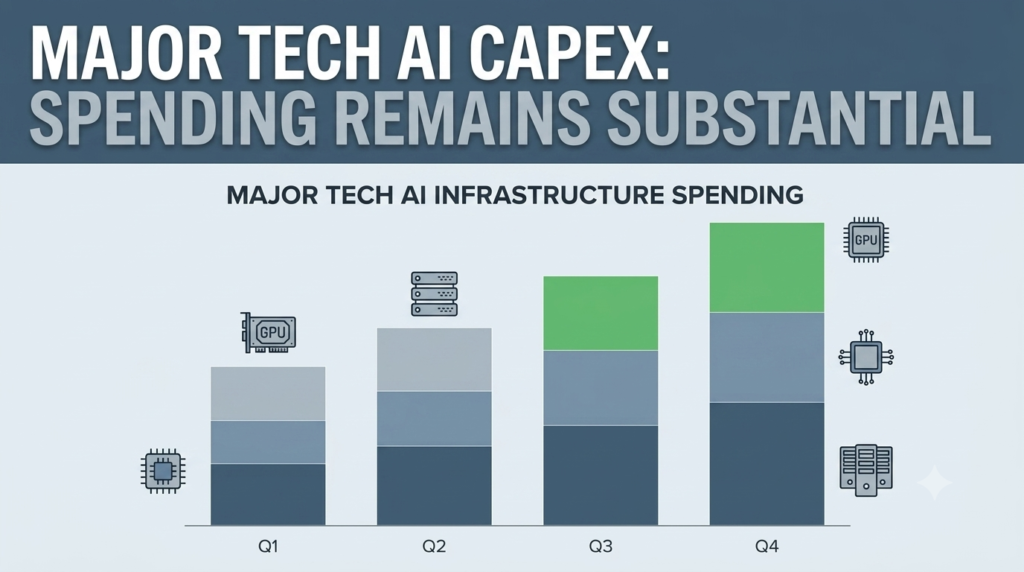
While initial market debates focused on whether this spending would impact short-term operating margins, current data shows that infrastructure investment remains active.
However, utility providers in primary data center hubs have noted that local grid capacity is facing operational limits due to the high energy density required by modern AI server clusters.
1. Baseload Power and Clean Energy Considerations
To maintain continuous 24/7 data center operations while adhering to corporate sustainability targets, facility operators require reliable baseload electricity. While solar and wind contribute significantly to the energy mix, their intermittent nature presents operational challenges for high-uptime facilities.
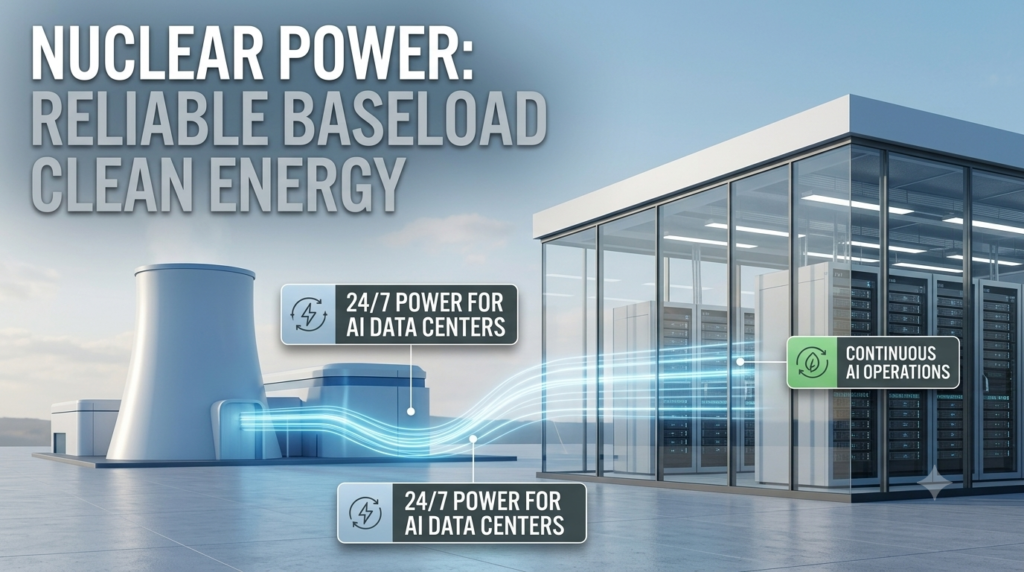
Consequently, zero-emission baseload sources—specifically nuclear energy—have drawn increased attention from industry planners seeking long-term Power Purchase Agreements (PPAs).
- Market Context: Established nuclear plant operators such as Constellation Energy (CEG) and Vistra Corp (VST) are frequently cited in market reports due to their existing clean energy generation capacities.
- Emerging Technologies: Next-generation Small Modular Reactor (SMR) developers, including companies like NuScale Power (SMR), are also being monitored by industry experts as potential long-term options for localized power generation.
2. Electrical Grid Equipment and Infrastructure Supply Chains
Generating electricity represents only one portion of the infrastructure equation. Transmission and distribution hardware are equally critical for connecting facilities to the power grid.
Upgrading regional grid networks and installing high-voltage transformers for large-scale data centers requires specialized industrial equipment.
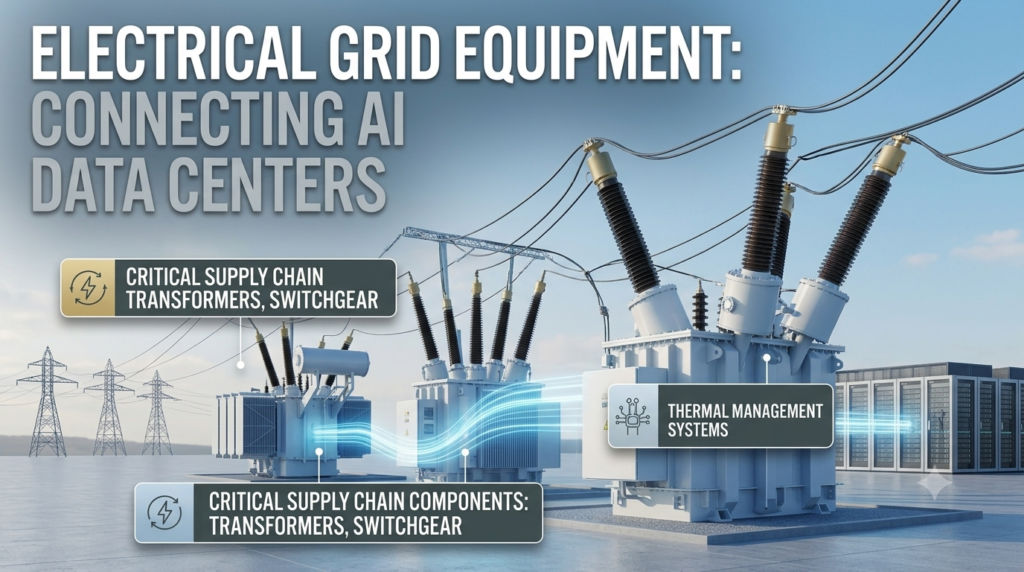
Manufacturing data indicates that equipment suppliers are managing extended lead times for critical grid components, including transformers, switchgear, and thermal management systems.
- Market Context: Global industrial hardware firms such as GE Vernova (GEV), Eaton Corporation (ETN), and Vertiv Holdings (VRT) represent key components of this physical supply chain. Vertiv, for instance, focuses on specialized liquid cooling technologies required for high-density compute environments.
3. Natural Gas as a Transitional Power Source
Given the time required to expand utility grid capacity, some data center projects are exploring natural gas generation as a interim energy source to prevent operational delays.
Manufacturers of heavy gas turbines and industrial generators are providing localized power setups for facilities awaiting full grid connection. Companies like Caterpillar (CAT) illustrate how traditional machinery manufacturers intersect with technology infrastructure demands.
Conclusion
The broader narrative surrounding technology infrastructure is multi-layered. While initial market focus centered primarily on semiconductor designers and software developers, physical infrastructure and energy capacity remain fundamental components of the ecosystem.
Understanding the balance between data center expansion and power grid capacity offers valuable context for analyzing modern industrial and energy sector trends.
Disclaimer: This article is strictly for educational and informational purposes only. It does not contain financial advice, stock recommendations, or investment solicitations. Always conduct independent research or consult a certified financial professional before making financial decisions.