
What Is Core PCE Inflation?
What Is Core PCE Inflation? Why the Federal Reserve Watches It More Than CPI
If you’ve followed financial news recently, you’ve probably seen headlines about the Core Personal Consumption Expenditures (Core PCE) Price Index.
Every time the Federal Reserve meets to discuss interest rates, analysts closely monitor this single inflation report. But why does the Fed pay so much attention to Core PCE instead of the more familiar Consumer Price Index (CPI)?
Understanding this difference can help investors, business owners, and everyday consumers better interpret market movements and monetary policy.
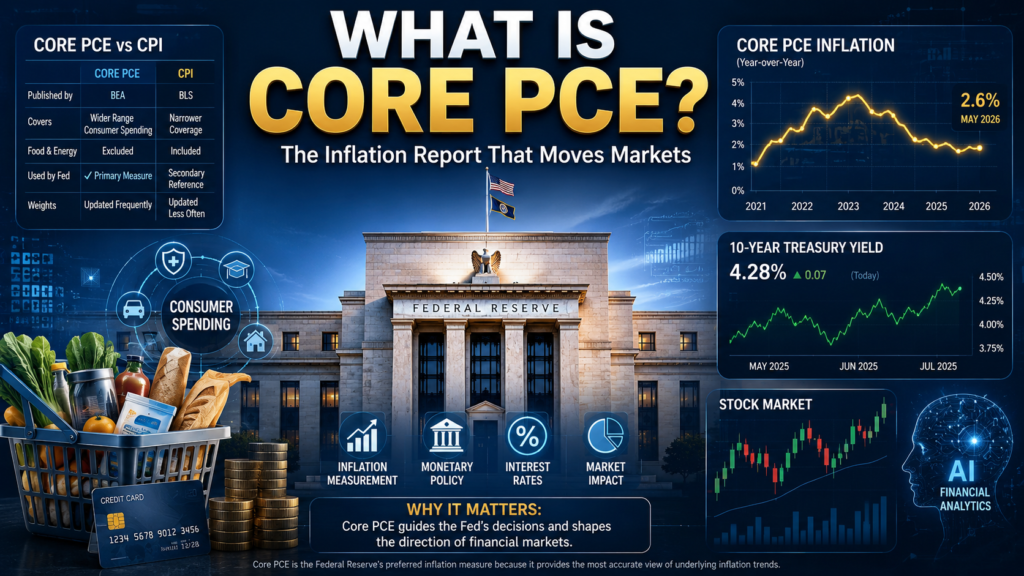
What Is Core PCE?
Core PCE measures the average change in prices that consumers pay for goods and services, excluding food and energy.
Food and energy prices can fluctuate significantly because of weather events, geopolitical tensions, and commodity markets. By removing these volatile categories, Core PCE provides a clearer picture of underlying inflation trends.
This is why policymakers often use it to evaluate whether inflation is becoming persistent or easing over time.
Why Does the Federal Reserve Prefer Core PCE?
The Federal Reserve has repeatedly stated that Core PCE is its preferred inflation gauge.
There are several reasons:
Broader Coverage
Core PCE includes a wider range of consumer spending than CPI, capturing expenditures made on behalf of households, such as employer-paid healthcare.
Flexible Consumer Behavior
Consumers often change their spending habits when prices rise. Core PCE reflects these substitutions more effectively than CPI.
Better Long-Term Trend Analysis
Because it excludes highly volatile categories, Core PCE helps policymakers identify longer-term inflation trends instead of reacting to temporary price spikes.
Core PCE vs CPI
| Feature | Core PCE | CPI |
|---|---|---|
| Published by | Bureau of Economic Analysis (BEA) | Bureau of Labor Statistics (BLS) |
| Food & Energy | Excluded | Usually Included |
| Used by the Fed | ✅ Primary Measure | Secondary Reference |
| Spending Weights | Frequently Updated | Updated Less Often |
| Healthcare Coverage | Broader | Narrower |
Although both measure inflation, they serve different purposes. CPI is often used to understand changes in consumer prices, while Core PCE plays a larger role in shaping U.S. monetary policy.
How Does Core PCE Affect Financial Markets?
Core PCE has the power to influence almost every major asset class.
Stock Market
Lower-than-expected inflation may support equities by increasing expectations that interest rates could remain stable or decline.
Higher inflation can pressure stock valuations, particularly in growth sectors.
Bond Market
Treasury yields often react immediately after the report is released because inflation affects future interest-rate expectations.
U.S. Dollar
A stronger inflation reading may strengthen the dollar if investors expect tighter monetary policy.
Gold
Gold sometimes benefits when investors believe inflation will remain elevated over the long term.
Why Investors Should Pay Attention
Even investors who do not actively trade should understand Core PCE.
The report influences:
- Mortgage rates
- Auto loan costs
- Credit card interest rates
- Savings returns
- Stock market sentiment
- Retirement portfolios
In many cases, a single monthly inflation report can shift expectations for Federal Reserve policy and move global financial markets within minutes.
Looking Ahead
Every Core PCE release offers new insight into the direction of inflation and the broader U.S. economy.
Rather than focusing only on whether inflation rises or falls, investors should also pay attention to how the data compares with market expectations, because surprises often have the biggest impact on financial markets.
Key Takeaways
- Core PCE is the Federal Reserve’s preferred measure of inflation.
- It excludes food and energy prices to reduce short-term volatility.
- Markets closely watch Core PCE because it influences interest-rate decisions.
- Core PCE can affect stocks, bonds, currencies, and borrowing costs.
FAQ
Is Core PCE the same as CPI?
No. Both measure inflation, but they use different methodologies and coverage. The Federal Reserve generally places greater emphasis on Core PCE.
Why are food and energy excluded?
These prices tend to be highly volatile. Excluding them helps reveal the underlying trend in inflation.
When is Core PCE released?
The Bureau of Economic Analysis (BEA) publishes the Core PCE Price Index monthly, typically near the end of each month.
Why do investors care about Core PCE?
Because it heavily influences Federal Reserve decisions on interest rates, which affect financial markets and borrowing costs.
Internal Links
- What Is the Federal Reserve?
- Fed Decision: What Investors Should Watch
- Understanding Inflation and Interest Rates
- How Treasury Yields Affect Stocks
- Top Economic Events This Week